Multiplayer Strategy
Reviewed 2026-10-15
Checked separate allied gangs, personal economies, and Last Stand home capture.
Reviewed controls, progression and available mode rules against the current catalog, simulation and visible menus.
Choose the rules before joining
Open Multiplayer rooms from the title screen, or Multiplayer from the solo pause menu. Choose Browse, Quick Match, Host a room, or join with an invite code. Check the ruleset and Co-op or Versus label before entering; an invite code is not an account-link code.
Solo Hill, Base Assault and Last Stand run on your device and require Internet throughout play. Connection loss pauses play; reconnect to continue without losing progress. These modes do not use the earned solo difficulty ladder or run perks. Multiplayer runs on the server and does not pause when you open a menu.
With teammates, the flag button (or your shortcut key) sends Push, Defend or Regroup requests. Allied AI follow them for 20 seconds; humans only see a marker. Auto cancels the order.
Room progress is not your solo save
Base Assault uses its own cash shop and gun progression; respawn time grows with gun tier. Last Stand uses match cash for weapons and teammate support, not hired personal crew; players respawn while home defense continues. Gold combat purchases are not a source of room cash.
Use the current priced prompt, not a remembered price. Solo and room upgrade prices can differ; online business purchases and upgrades must be confirmed by the room. Check Empire net income before spending payroll reserves.
Cash, territory, crew, and rank in a room belong only to that match. They never replace your saved City Takeover city or grant permanent training progress. City Takeover and Hill co-op: premium guns and Auto-Turret require host opt-in. Public matchmaking disables them. Versus disables premium guns and Auto-Turret. Solo, Base Assault and Last Stand equipment rules are unchanged.
The city-economy tactics below describe City Takeover rooms. They are not a substitute for the hill timer, Base Assault lanes, or Last Stand home defense.
Server Authority
Your client sends intent; the room server validates movement, combat, purchases, and objectives. A delayed screen is not proof that a shot or capture succeeded: wait for the confirmed health, owner, or score update before making your next decision.
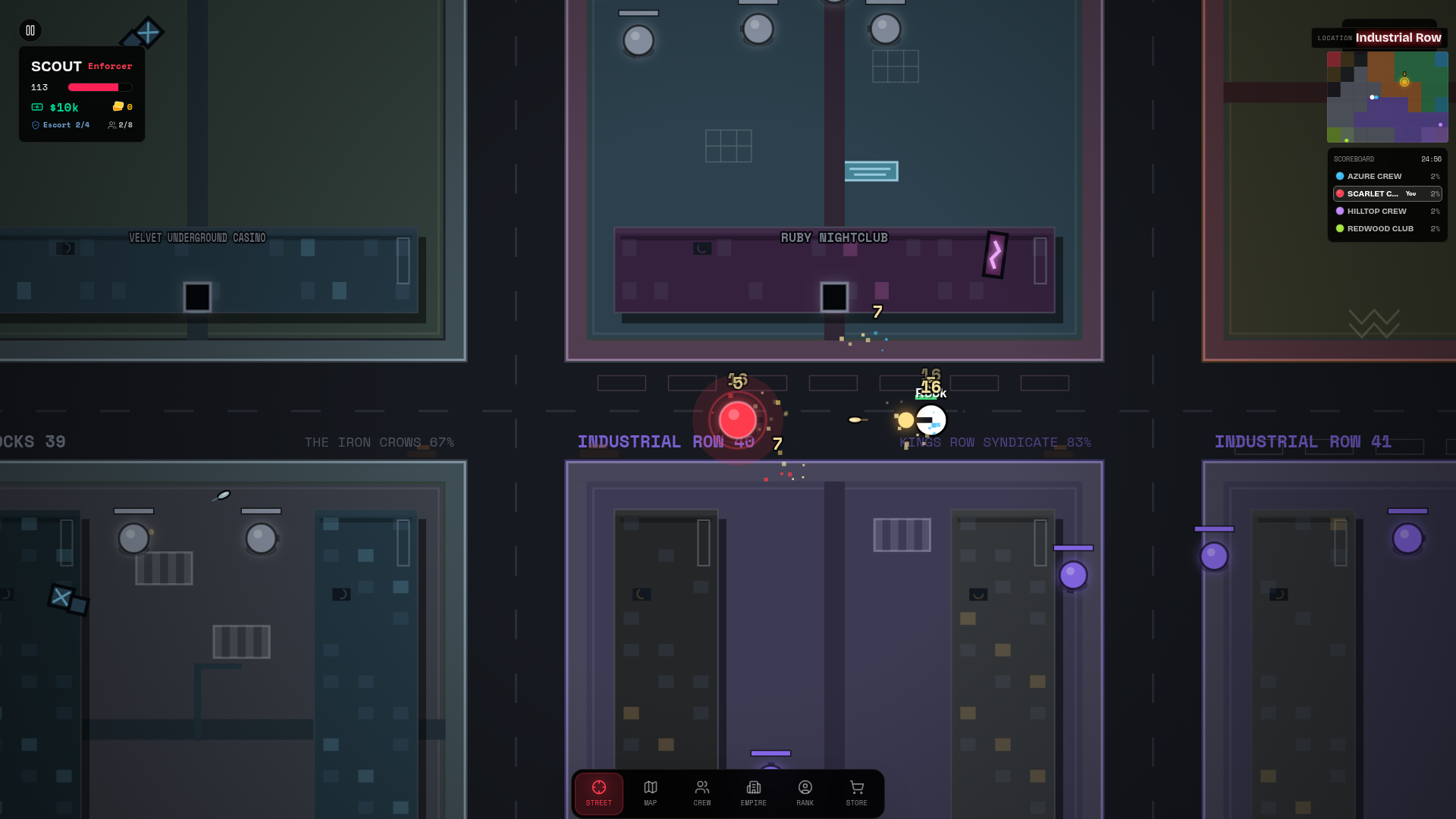
Contested Zones
When you attack a block owned by a rival player, it becomes Contested.
- Business income scales with the territory's current control; a battle does not apply a separate income-off switch.
- The server publishes territory and battle state so the defender can see the threat in real-time on their minimap.
- Damage can reduce control during combat, but hostile defenders on the block pause the zero-control ownership hold. A fight and a completed capture are different states.
Live Tactics & Concrete Decisions
To succeed in multiplayer, you must out-think, not just out-shoot.
- Border Defense: Always leave garrisons on exposed territories. A block without a garrison recovers control slowly, making it an easy target for opportunistic rivals.
- Economic Pressure: Target your rival's high-income properties like Casinos and Warehouses. But make sure to finish the capture—abandoned progress decays over time.
- Timing: Attack a strong player's borders while their escort crew is committed to another fight across the map.
Server Authority
Server authority means the room continues to resolve territory, combat, and income from one shared state. Watch published battle state rather than assuming a quiet screen means a safe border. If an attack starts while you are across the map, decide whether the threatened block is worth the travel time or whether pressure on the attacker's economy is the better answer.
Reconnection restores your server-owned slot rather than creating a second player. After reconnecting, re-check your location, crew assignments, contested blocks, and current cash before issuing a new command. The server—not a stale local panel—remains the source of truth.
Opening and Mid-Room Priorities
Early in a room, build one dependable income route instead of racing for scattered premium blocks. A connected border is easier to read and reinforce, and it gives fewer opponents an exposed target. Once the room develops, identify which rival is converting income into crew and which is merely holding land. Pressure the economy that can fund the next attack.
Coordinate assignments by purpose: escorts protect the player, garrisons stabilize owned blocks, and assault crews create pressure elsewhere. Moving everyone toward one visible fight can leave the server to resolve an unattended capture on the opposite border. The map and battle state are operational information, not decoration.